OUR ESTEEMED UNIVERSITY CONNECTIONS
YOUR DREAM UNIVERSITY IS ON THIS LIST, EXPLORE OUR GLOBAL REACH
Marquee Container

























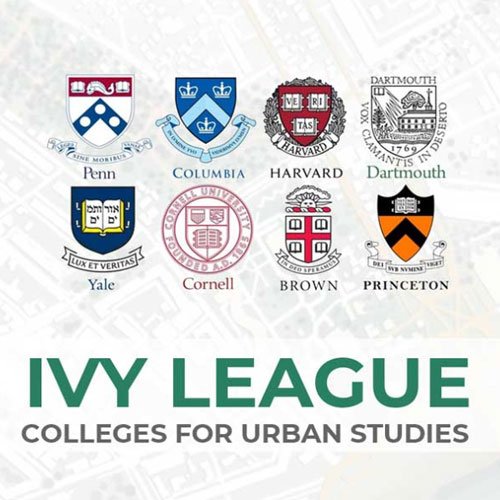
The Ivy League is a group of eight prestigious private universities in the United States, known for academic excellence, long-standing history, highly selective admissions, and influential alumni networks. For students looking to study in the USA, these institutions offer undergraduate and graduate programs across fields such as liberal arts, sciences, business, law, medicine, engineering, and research. International applicants should understand each university’s admission requirements, academic expectations, application process, and program options before applying.
The Ivy League consists of eight private institutions, each with its own academic strengths, campus environment, programs, and admission process:
Harvard University – Cambridge, Massachusetts; founded in 1636
Yale University – New Haven, Connecticut; founded in 1701
Princeton University – Princeton, New Jersey; founded in 1746
Columbia University – New York City, New York; founded in 1754
Brown University – Providence, Rhode Island; founded in 1764
Dartmouth College – Hanover, New Hampshire; founded in 1769
University of Pennsylvania (UPenn) – Philadelphia, Pennsylvania; founded in 1740 and officially chartered in 1755
Cornell University – Ithaca, New York; founded in 1865
Although these universities are located in different parts of the United States, they share a reputation for rigorous academics, selective admissions, extensive research opportunities, and strong alumni communities.
Students consider these institutions for their academic reputation, diverse study options, research opportunities, experienced faculty, and global alumni networks. Their programs cover areas including business, computer science, engineering, economics, liberal arts, sciences, law, medicine, and social sciences.
For international students, studying at an American institution of this level can also provide access to interdisciplinary learning, research projects, internships, and professional networks. However, the right university depends on the student's academic interests, qualifications, career objectives, budget, and preferred campus environment.
Admission to these universities is highly competitive. Applicants are generally evaluated through a combination of academic performance, course rigor, extracurricular involvement, essays, recommendations, achievements, and other application components.
Depending on the university and program, applicants may need to provide academic transcripts, standardized test scores where applicable, English-language proficiency results, recommendation letters, personal essays, and other supporting documents.
Students asking how to get into Ivy League universities should therefore focus on developing a strong overall application rather than relying on one qualification alone. Requirements can differ between undergraduate and graduate programs, so applicants should verify the current criteria of their chosen institution.
Ivy League universities are recognised for their breadth of undergraduate and graduate education. Students can explore business programs, engineering courses, computer science, economics, humanities, natural sciences, medicine, law, and research-focused degrees.
Many programs also encourage students to combine subjects or participate in research, internships, academic projects, and collaborative learning. This flexibility can be valuable for students who want to build specialised knowledge while developing broader academic and professional skills.
Key characteristics commonly associated with these universities include:
Strong academic and research environments
Highly selective admission processes
Wide-ranging undergraduate and graduate programs
Established alumni networks
Opportunities for interdisciplinary study
Strong presence across business, science, law, medicine, and humanities
International recognition of their academic institutions
Acceptance rates can often be below 10%, although selectivity varies by university, program, applicant pool, and admission cycle. Therefore, students should check official university information for the latest figures rather than relying on historical statistics.
The best-fit institution depends on more than rankings or reputation. Applicants should compare course structure, entry requirements, location, tuition and living costs, financial aid, scholarships, research opportunities, campus culture, and career resources before submitting applications.
International students should also review documentation requirements, application deadlines, English-language requirements, financial planning, and the appropriate U.S. student visa process as part of their study-abroad preparation.
Planning for highly selective U.S. universities requires early preparation and careful attention to each institution's requirements. Students can research suitable programs, assess their academic profile, prepare application documents, develop strong essays, and track university deadlines before applying.
If you are planning to study in the USA and exploring Ivy League admissions, begin by identifying universities and programs that match your academic background and long-term goals, then review their current official admission requirements before preparing your application.
YOUR DREAM UNIVERSITY IS ON THIS LIST, EXPLORE OUR GLOBAL REACH
Marquee Container